
Sales-Metrics-That-Truly-Matter

Sales Metrics That Truly Matter

Sales Metrics That Truly Matter

The metrics you select to measure can make a significant difference when it comes to sales. But which sales indicators really count?

In the current fast-paced corporate world, data is the key to making wise decisions and succeeding. Knowing your sales metrics well is also crucial when it comes to making sales. Finding areas for improvement without looking at these indications can be difficult. The performance of your sales force must be measured and optimized because sales are the primary source of revenue for the majority of organizations. You may more effectively contribute to the overall objectives of the company and boost revenue by tracking the appropriate sales indicators, which allow you to identify what is working and what may need to be adjusted. Because of this, successful businesses put a strong emphasis on measuring every component of their sales strategy, go-to-market model, and sales force. But with so many metrics related to sales, it can be difficult to know which ones are actually important.

In this article, we’ll look at what sales metrics are, why are they important, and which sales metrics to track.

What Are Sales Metrics and Why Are They Important?

Sales metrics are the data points you monitor to evaluate individual, team, and organizational sales success. You can determine what is working and what is not by monitoring and evaluating progress, making it a crucial step in enhancing your sales performance and, eventually, revenue. You may evaluate the success of your company’s sales activities using sales metrics. Intuition and gut feelings are insufficient when creating a fresh outreach campaign or attempting to demonstrate the return on investment of your sales development reps. Metrics are necessary to concentrate on practical results and produce insights that can be put to use.

Important Sales Metrics to Track

Revenue

The total of all sales for all of the products and services is referred to as total revenue. Total revenue is a versatile indicator that may be used to track several performance categories. You can keep track of the revenue earned by a single product, a certain area, or a specific representative. The most adaptable metric is revenue.

Market Penetration Rate

The degree to which your sales strategy is successful in reaching the appropriate audience is indicated by your market penetration rate. Finding clients that will stick with your brand, use it frequently, and recommend it to others is possible when you continuously speak to the proper demographics. For territory planning and revisions, market penetration rates are very helpful. Use it to avoid internal conflict caused by sales rep efforts that overlap within particular geographic regions or segmentations.

Quota Attainment

Quota attainment indicates both the proportion of the sales representative’s quota that has been met and if they have met it within the given time limit. Low quota attainment rates can be a sign of more complicated problems with the sales team, such as insufficient guidance, capacity planning, and rep ramping, making this indicator crucial to track.

Win Rate

The win rate, also known as the opportunity-to-win ratio, is a statistic of closed or successful agreements relative to the total number of deals made, which includes deals that are still open, slipping, lost, or in the pipeline. Win rate essentially gauges a sales team’s performance in closing deals. To find out more about the benefits and drawbacks of your present strategy, you can examine how your win rate develops over time and how it differs between salespeople.

Average customer lifetime value is the amount of money that a client typically brings into your business over the course of their relationship with you and use of your products or services. Since it costs significantly less to retain a current client than to acquire a new one, this metric can assist your salespeople in creating plans and efforts to enhance LTV.

Summing Up

When the appropriate sales metrics are in place, the organization and its contributors understand where they stand. You will be ahead of the game if you carefully select which ones to prioritize and then course-correct. Appropriate sales measurements can aid in determining the state of sales in relation to time-based targets. You can track your progress, meet your sales targets, and improve your bottom line. Perhaps most crucially, the correct sales metrics can assist an organization in making sound judgments about any modifications required to meet both short-term and long-term goals.

MarTech-Stack-Challenges-and-How-to-Get-Past-Them

MarTech Stack Challenges and How to Get Past Them

MarTech Stack Challenges and How to Get Past Them

A strong MarTech stack will help you engage existing customers and move prospects down the sales funnel. What challenges do businesses face and how can you overcome them?

MarTech Stack Challenges

.Executing competitive marketing campaigns has never been more difficult. Today’s marketing teams must be equipped with the necessary technologies in order to scale up, stay within budget, outperform competitors, and achieve a return on investment. Of course, doing all of this manually is impossible. That’s where the marketing technology you choose, often known as a MarTech stack, comes into the picture. In this blog, we will discuss the challenges that businesses face when creating or improving their MarTech stacks and how businesses can stay out of them.

Tech Stack Integration

The goal of marketing technology platforms and tools is to simplify tasks, but if you build a stack without a defined plan, you run the risk of these platforms and tools operating in silos. Make sure every component in your stack can connect with one another, as marketing technology integrations save both resources and time.

Aim for integrations that enhance your workflow, which means that tasks and operations should be automatically triggered from one piece of technology to the next. Your integration must be data-driven. In order to avoid having inconsistent and perplexing data that makes it difficult to assess the success of your marketing efforts, it is important that the data be synchronized across several platforms in real time.

Try to understand how the integration will be put together when you decide which solutions to include in your MarTech stack. Next, focus on how the data will be exchanged. Additionally, run internal tests to make sure the workflows function as planned.

Selecting The Right MarTech Stack

We all want to use the most up-to-date technology, but adding innovative platforms and applications when they aren’t genuinely necessary poses the risk of cluttering your stack. After all, having different systems and platforms can make managing relationships and integrations challenging.

You won’t make much progress with marketing solutions that are set up incorrectly or that use irrelevant metrics. And because of this, it’s crucial to consider it as a single technological system rather than a collection of different tools. You must prioritize simplicity of use in addition to making sure your marketing stack is completely connected, since doing so will help you save both time and funds on things like training and guarantee that your team is making the most of the technology you choose. Additionally, make sure your stack enables audience segmentation because more tailored marketing messages have a higher likelihood of standing out in the competitive space.

Determine precisely the tasks that must be completed before choosing, designing, and optimizing your tech stack. Do not simply add more tools as new technologies come into the market or as new problems arise.

“A strong MarTech stack will help you engage existing customers, move prospects down the sales funnel, and increase sales.”

Stack Bloat

Marketing teams might want to work on the latest technology, which can result in a bloated tool stack with a lot more tools into one than actually required. Think of your tech stack as a single integrated system of technology rather than a collection of individual tools while developing and optimizing it. Teams can prevent a bloated stack of underutilized technology by first determining precisely what tasks must be completed by their entire tech stack rather than continuously adding new tools as new problems arise.

Take a step back to examine your complete MarTech stack and spot any functional overlap between various tools if you’re starting to suspect that your current technology stack might already be overstuffed. Working with MarTech integration professionals can assist in identifying opportunities to reduce martech stack bloat across your technologies because it can be challenging for internal team members to see the whole picture objectively.

Dealing with data and privacy

Customers today want to know that their personal data is secured, and with numerous data policies being implemented in markets all around the world, it’s more crucial than ever to take privacy seriously and exhibit transparency and reliability.

Analyze the data policy of each technology by mapping your current stack. The best services and platforms are frequently offered in software-as-a-service (SaaS) and cloud storage formats, both of which present a number of security risks that you should be aware of. Additionally, whenever you’re thinking about adding a new product or platform to your stack, make sure the seller complies with CCDPA and GDPR, and give preference to those who take additional security precautions above what is required by law.

Similar to this, if many users are managing the same accounts and using the same login information, you should often update your passwords, implement two-factor authentication, and regularly remove users who have left the company.

Overinvestment in Tools

Without enough research, teams risk wasting money on either expensive tools they don’t need or several tools that each do a very specific job. Since many platforms come with built-in eCommerce capabilities, many businesses might cut their spending on digital commerce by more carefully incorporating their digital commerce strategy within their content management systems (CMS).

The team may occasionally buy marketing products without fully understanding their capabilities and tech integrations. It is practically hard to determine if a tool is the best choice for achieving your goals without having a clear understanding of its value. Working with specialists in MarTech tools can help teams choose the solutions that are best suited for their objectives and existing knowledge while not overspending on the marketing technology they require.

Wrapping Up

Marketers who have a MarTech stack that is well optimized can deliver relevant experiences to the appropriate clients across all touchpoints, increasing engagement, conversion rates, and ultimately ROI. Because of how quickly marketing technology is developing, teams may find it challenging to manage complex, disconnected tech stacks. It takes optimizing the stack and simplifying it with specific marketing objectives to turn MarTech into business outcomes.

Leaders in marketing must also think about developing teams to handle the management and use of these technological resources. It’s crucial that the tools or platforms you choose support the current stack and speak to each in a logical and connected way if you want to make sure that your MarTech stack produces a seamless customer journey, accomplishes your marketing goals, and enhances productivity.

Web3-Explained-What-is-it-and-why-is-it-important

Web3 Explained: What is it, and why is it important

Web3 Explained: What is it, and why is it important

Web3 offers an engaging online experience with better privacy and control over personal data. It is an opportunity to create a better internet!

Web3 Explained: What is it, and why is it important

Web3 alters everything we know about the web and who controls it. Web3 knows. It understands everything. It can put information together in a way that is similar to how humans do it since it comprehends what you mean and the context in which you use the internet. Web3 technologies can read between the lines to determine the purpose of your online requests. Supporters of Web3 assert that these deeper insights will revolutionize our online experience. However, like with any rapidly developing technology, it can be challenging to distinguish between reality and wishful thinking. So, if you’ve had trouble understanding the buzz surrounding Web3 or wonder why Web3 is important, we’ve got you covered.

What is Web3?

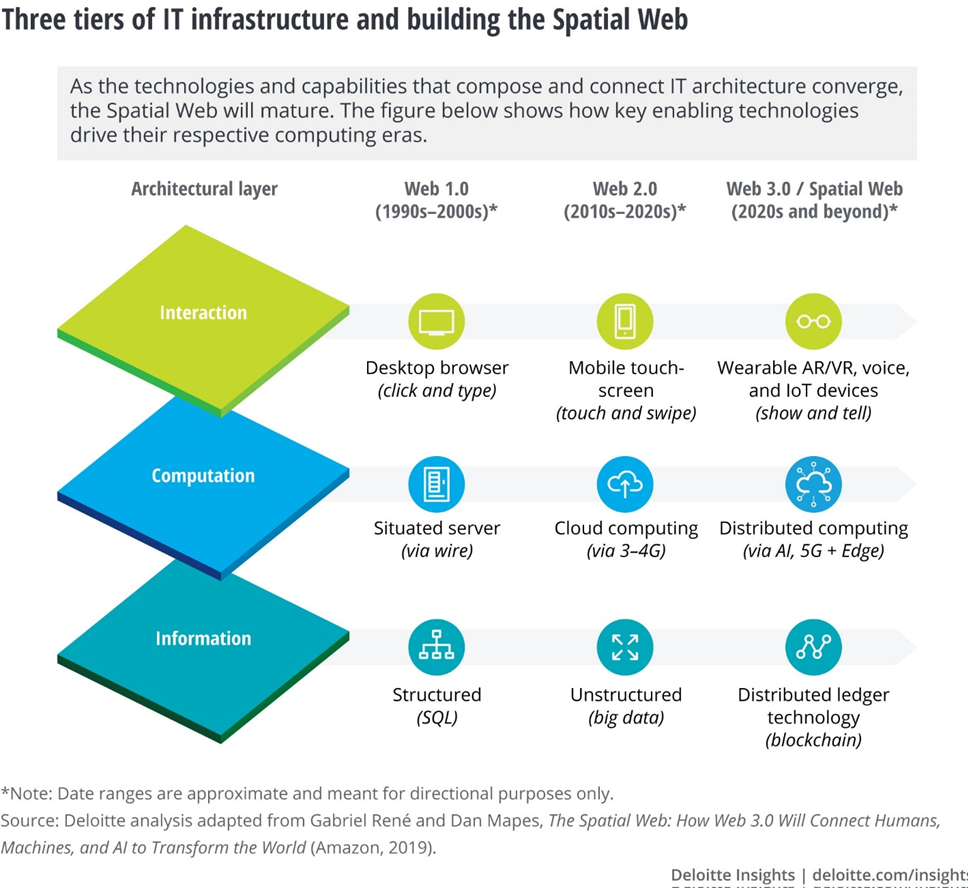
Web3 is the third generation of the World Wide Web, often referred to as Web 3.0. Web 3.0 differs from Web 2.0 and Web 1.0 in that it is built on a particular set of values, technical requirements, and guiding principles. Built on the framework of blockchain technology and advancements in the Semantic Web, which outlines the Web as a network of logically linked data, Web3 is intended to be open to everyone, decentralized, and completely transparent.

Users are intended to have more control over their data in this version of the internet rather than having it shared with businesses that profit from the sale of personal data. An engaging internet experience with improved control and enhanced privacy of personal data is the expected outcome. Web3 is the next significant evolutionary step for the Internet, and it is powered by NFTs, blockchain, and cryptocurrencies. Decentralization, however, is likely Web3’s most distinctive characteristic.

image 8

How does Web3 work?

The decentralization of Web 1.0 and the interactivity of Web 2.0 are integrated into Web3 to create a user-friendly interface. With blockchain technology, it ideally provides each user with more control over their experience on the internet and greater privacy. You needed to depend on the security and technology of major IT businesses because of Web 2.0. Users now have complete control over Web3. Tokens can be exchanged for contributions from users who are taking part in the development process of Web3.

Data ownership:

When you use a site like YouTube or Facebook, such companies gather, control, and monetize your data. Your data is kept on your cryptocurrency wallet in Web3. On Web3, you can interact with apps and communities through your wallet, log off, and take your data. Since you are the owner of the data, you may choose whether to monetize it.

Pseudonymity:

Your wallet comes with privacy features much like data ownership. The identity you use on Web3 is your wallet, and it is difficult to connect this to your actual identity, thereby enhancing security. Therefore, even if someone can view the activities of a wallet, they won’t know that it belongs to you. There are services available that enable individuals to access their cryptocurrency wallets used for illegal behavior. Your identity is kept secret for daily use, nevertheless.

Democracy:

Web3 apps are managed democratically by decentralized autonomous organizations (DAOs). As a result, a centralized authority no longer makes any decisions but rather users who own tokens do that. Such tokens can be acquired by taking part in the development of these decentralized programs.

Final Words

The shift to Web3 is a continuous process that has the potential to profoundly transform the state of the internet. We can anticipate the emergence of creative solutions and novel possibilities across numerous sectors as more people, governments, and organizations take up the decentralized web. In conclusion, Web3 presents a vision of a more empowered, open, and user-centric web that encourages innovation. We need to remain cognizant and involved in today’s debate about Web3 and its possible impact on our daily routines as we keep discovering the potential of this emerging digital landscape.

How Software Development Will Evolve in 2023: Insights from Gartner and Other Experts

How Software Development Will Evolve in 2023: Insights from Gartner and Other Experts

How Software Development Will Evolve in 2023: Insights from Gartner and Other Experts

Curious about the future of software? Uncover predictions for 2023, covering sustainability, AI mainstreaming, and other leading trends reshaping the industry.

Software development is not only a technical activity but also a strategic one. It can help organizations optimize their resilience, operations, and trust, scale their solutions and products, and pioneer new forms of engagement and opportunity. As we approach 2023, software developers must be aware of the latest trends and technologies shaping the industry and the world. In this blog post, we will share some insights from Gartner and other experts on the top software development trends for 2023.

Trend 1: Sustainability

image 5
Source

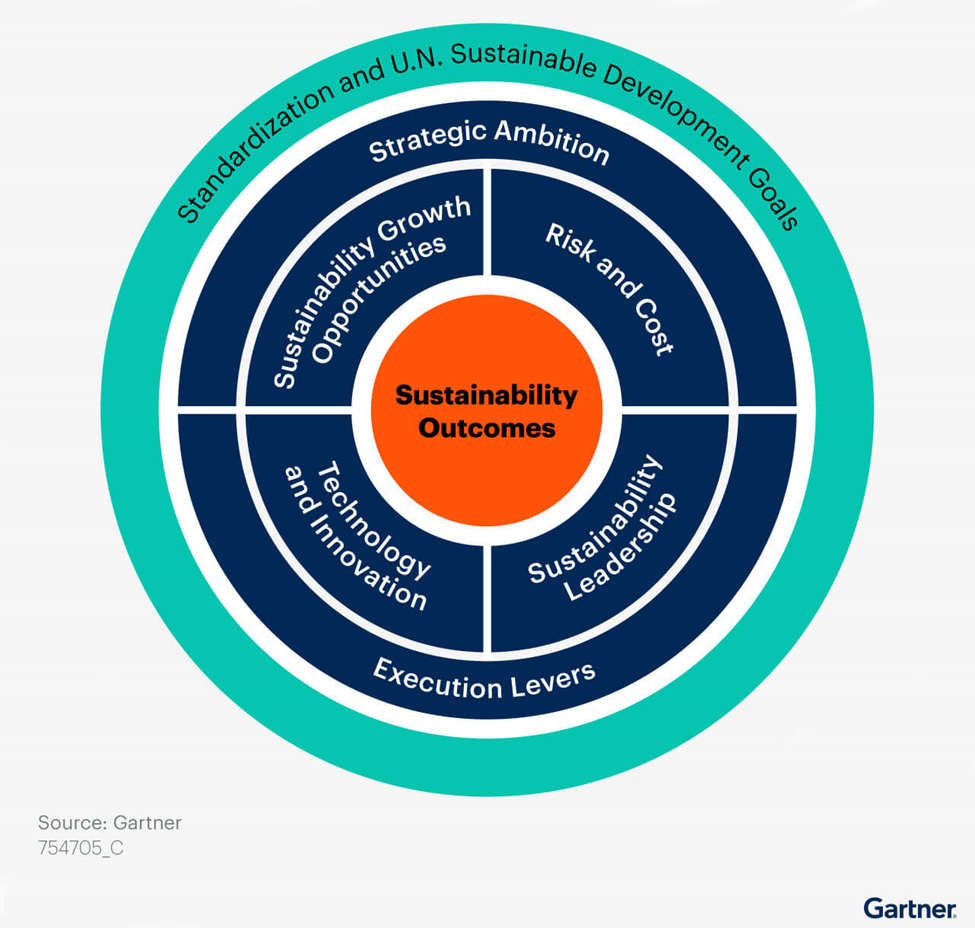
Sustainability is not just a buzzword but a necessity and an opportunity for software developers. Sustainability traverses all of the strategic technology trends for 2023. Software developers need to consider how their products can reduce environmental and social impact and support green initiatives such as renewable energy sources, circular economy, or smart cities. According to Gartner, 83% of organizations have attested to the remarkable impact of their sustainability programs. These programs generate immediate value and establish a lasting positive influence on their overall success.

For example, software developers can use cloud computing to lower their carbon footprint or use blockchain to enable transparent and ethical supply chains.

Trend 2: AI becomes mainstream

image 6

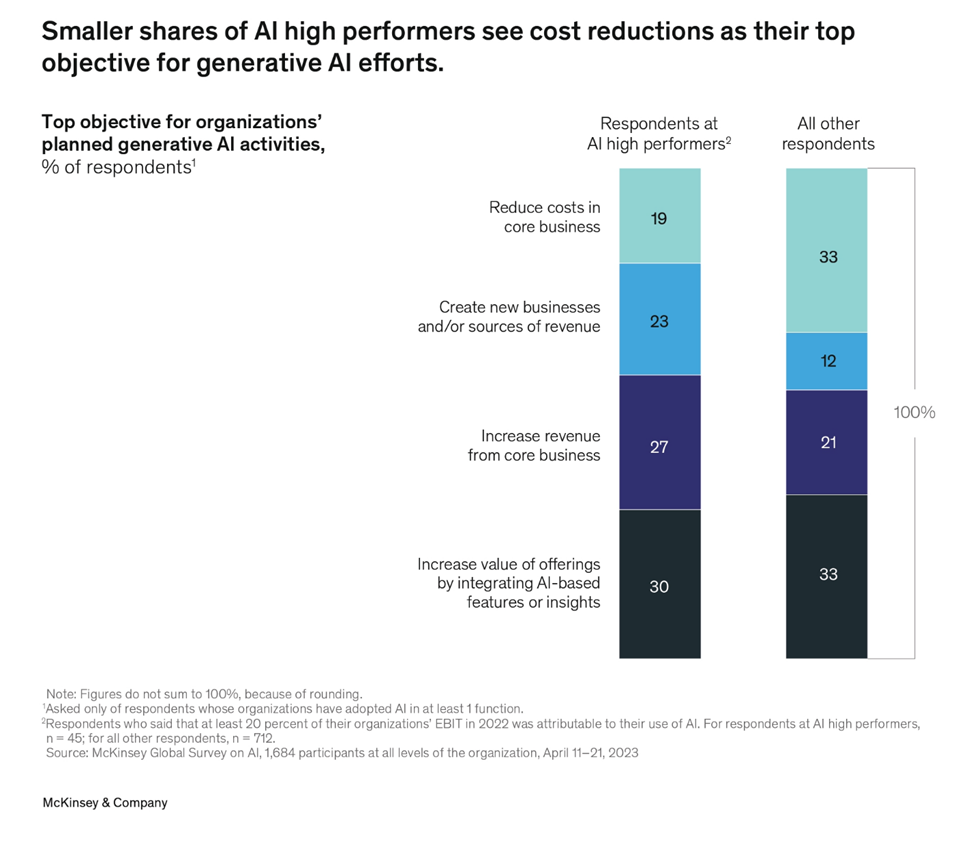
Artificial intelligence (AI) is already transforming every aspect of software development, from automating tasks, enhancing quality, optimizing performance, and generating code, to creating new user experiences. A 2023 McKinsey survey results show that the top AI performers are going all in on artificial intelligence, with generative AI and other traditional AI capabilities. As more organizations leverage artificial intelligence to gain competitive advantage, improve customer satisfaction, and increase efficiency. Software developers must keep up with the latest AI tools, frameworks, and platforms that make integrating AI into software applications easier.

Trend 3: Digital Immune System

The COVID-19 pandemic has impacted defense mechanisms of many software systems and applications to external threats and disruptions. To ensure greater resilience and reliability, software developers need to adopt the concept of a digital immune system, which is the ability of software systems to detect, prevent and recover from cyberattacks, errors, and failures. The digital immune system is one of the top strategic technology trends in 2023. Software developers can achieve digital immunity by implementing security best practices, such as encryption, authentication, authorization, and auditing, and using technologies such as blockchain, edge computing, and quantum computing that offer higher security and performance.

Trend 4: Industry Cloud Platforms

Cloud computing is not a new trend, but it is evolving to meet different industries’ specific needs and challenges. Industry cloud platforms are cloud services tailored for a particular vertical market, such as healthcare, education, manufacturing, or retail. They offer specialized features, functionalities, and integrations that address each industry’s unique requirements and regulations. Software developers must be familiar with the industry cloud platforms relevant to their target markets and customers.

Trend 5: Platform Engineering

image 7
Source

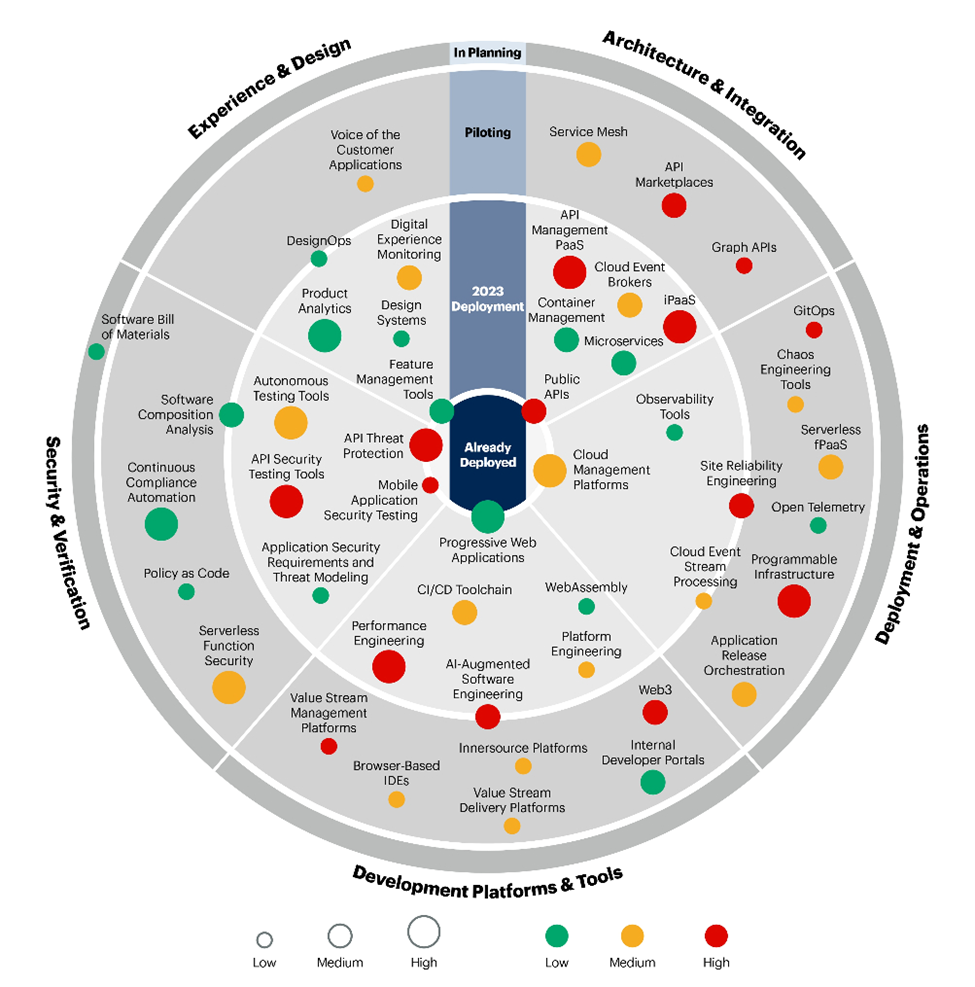
Platform engineering is a new approach to software development that focuses on building scalable, reliable, and adaptable platforms that can support multiple applications and services. Platform engineering involves using technologies such as microservices architecture, containers, Kubernetes, serverless computing, and DevOps practices to simplify the deployment and scaling of software systems. A Gartner Report, platform engineering is one of the most valuable and widely adopted technologies for software development in 2023. Software developers must master platform engineering skills and tools to create modern software solutions.

Trend 6: Metaverse

Metaverse is a term that describes a virtual reality environment where people can interact with each other and with digital content in immersive ways. Metaverse can enable new forms of entertainment, education, socialization, and commerce. According to Gartner, By 2026, 30% of organizations worldwide will have products and services ready for the metaverse, up from negligible now. Software developers must explore how to create engaging and innovative experiences for users in the metaverse using technologies such as AR (augmented reality), VR (virtual reality), 3D graphics, and spatial audio.

The Final Word

Software development is not a static field but a dynamic and evolving one. Various factors influence it, such as customer needs, market demands, social changes, environmental issues, and technological innovations. Software developers must be aware of these factors and adapt accordingly. In 2023, we expect to see exciting and challenging trends and technologies shaping the software industry and the world. By staying updated on these trends, software developers can prepare themselves for the future and create software solutions that can optimize, scale, and pioneer in their respective domains.

blog (2)

Navigating Tomorrow: Unveiling Augmented Reality’s 2023 Breakthroughs

Navigating Tomorrow: Unveiling Augmented Reality’s 2023 Breakthroughs

Step into the future of augmented reality as we unveil the key trends and breakthroughs that are reshaping the way we interact with technology in 2023.

Introduction

Augmented Reality (AR) has emerged as the vanguard of innovation, in the epoch characterized by monumental technological leaps, reshaping our perception and experience. AR masterfully blends digital information with the physical world at its heart, forging a symbiosis between reality and the virtual realm. This disruptive technology has revolutionalized entertainment, permeating diverse healthcare, commerce, education, and other verticals. This article embarks on a captivating exploration of AR’s evolution in 2023, dissecting its transformative trends and far-reaching implications.

Evolving AR Landscape

The ubiquitous integration of AR across industries is a testament to its burgeoning influence. By seamlessly overlaying digital imagery onto the tangible world, AR pioneers novel user experiences, igniting engagement and immersion. This harmonious interplay between technology and reality catapults AR into an indispensable solution for sectors yearning for innovative breakthroughs.

AR Shaping the Future – 2023 and Beyond

Immersive Realities: Propelling AR Visualization to New Frontiers

The realm of AR experiences a revolution through the advancement of spatial computing and real-time interaction. Spatial computing liberates us from the confines of static screens, ushering in dynamic engagements with holograms and intricate 3D models. Further elevating our AR encounters, refined object recognition and tracking mechanisms breathe life into the technology, enabling unparalleled precision in object identification.

Augmented Commerce: Redefining Retail and E-Commerce Landscapes

AR casts an enchanting spell upon the retail landscape. Virtual try-on experiences empower customers to virtually ‘try out’ products before committing, paving the way for informed purchasing decisions. Beyond this, AR empowers e-commerce platforms with interactive product visualization, transcending conventional displays and enhancing the shopping experience.

Healthcare Transformation Through AR

The fusion of AR and healthcare transcends mere experimentation, heralding a fundamental shift in medical practices. Surgical procedures and training attain new dimensions with the aid of AR, providing practitioners with real-time guidance. In the same vein, patients reap the benefits of AR through personalized education and rehabilitation programs that enhance their engagement and recovery.

AR in Entertainment and Gaming

Gaming and entertainment continue to be fervent proponents of AR’s immense potential. Immersive gaming experiences whisk players into digital realms intertwined with reality, blurring the lines between fiction and actuality: interactive storytelling and virtual events further leverage AR’s prowess to reshape the fabric of narrative experiences.

Innovations Propelling AR Development

Advances in Hardware Technology

AR hardware evolves to heighten user comfort and engagement. Lightweight wearables redefine convenience, ensuring prolonged periods of immersive interaction. By integrating Artificial Intelligence (AI) and dedicated AR processing units, devices unleash their full potential, enhancing real-time interactions and responsiveness.

Software and Platform Enhancements

The rise of AR toolkits democratizes content creation, empowering developers to craft immersive experiences effortlessly. The advent of cloud-based applications takes accessibility and scalability to new heights, bestowing users with seamless AR encounters spanning various devices.

Navigating Challenges and Considerations

Privacy and Data Security Concerns

The ascent of AR inevitably ushers in concerns about data privacy. The delicate equilibrium between data collection and user consent takes center stage, preserving the trust between technology and its users. Robust measures against potential misuse of AR technologies emerge as ethical pillars guiding responsible applications.

Ethical Reflections on AR

The nexus of the digital and real worlds invites profound ethical inquiries. As reality intertwines with the virtual, the authenticity of information comes under scrutiny. AR’s impact on human interaction necessitates contemplation on sustaining genuine connections amid the augmentation of our surroundings.

Peering into the Future of AR

Collaborative and Shared AR Experiences

The trajectory of AR leads to collaborative ventures that bridge geographical chasms. Shared AR interactions, whether for work or leisure, herald an era where virtual exchanges rival the tangible world, enhancing connectivity and engagement.

Integration of AR in Education and Training

Educational landscapes stand poised for an AR revolution. Abstract concepts metamorphose into tangible entities, enabling students to visualize intricate ideas in real-world contexts. The professional training arena, too, benefits immensely from AR’s capacity to simulate real-world scenarios.

Anticipating Technological Breakthroughs in AR

The dynamic nature of technology foreshadows groundbreaking advancements. AR’s evolution could encompass heightened realism, elevated interactivity, and a more profound integration with AI, further expanding its transformative potential.

Conclusion

As the tapestry of reality undergoes continual shifts, AR stands as a beacon of innovation, illuminating the path toward a future unshackled by conventional boundaries. The trends of 2023 cast a spotlight on AR’s extraordinary journey, underscoring its potency in reshaping industries, human encounters, and our fundamental perception of the world. With each stride forward, AR draws closer to becoming an indelible facet of our digital existence, offering a vista of uncharted prospects.

Asaf-Darash Consolidation in the Activities Market: Bridging the Gap in a Fragmented Landscape

Consolidation in the Activities Market: Bridging the Gap in a Fragmented Landscape

Consolidation in the Activities Market: Bridging the Gap in a Fragmented Landscape

The activities market is an expansive and dynamic ecosystem, encompassing various industries like education, events, conferences, camps, and more. The industries in this market are growing rapidly. For example, the summer camp market in the US alone is a 3.5 billion dollar market. The events and conference markets are expected to reach 2 trillion by 2028. In spite of the market size and importance, the market is still underserved, mainly due to the fact that no software has consolidated the market and created standard best practices. Fragmentation has its costs in the form of inefficiencies, lower retention rates, employee burnout, and hindered growth. To consolidate the activities market, there is a strong need for a singular software solution to unify the complex payment and onboarding process needs within each business. A Shopify for services if you will.

Why So Fragmented?

What does it mean that the market is fragmented? To shed light on this concept, let’s consider an analogy. Imagine starting a new business that sells items online, such as pens or watches. In this scenario, you would look for software that allows you to sell a range of products, without the need for specific software tailored exclusively to pens or watches. However, in the activities market, the situation differs. If you were to open a camp, you’d seek out “camp software,” and for an event, you’d search for “event software.” Why does this disparity exist? The root of the issue lies in the onboarding process.

Service-based businesses, in contrast to those dealing in merchandise, inherently involve an onboarding process. While purchasing a pen involves selecting, checking out, and concluding the transaction, registering for an event, or enrolling a child in a camp demands supplying personal information, often e-signing documents, making selections, and finally, making a payment. Payment, in this context, represents just the concluding step of a much more intricate procedure – the onboarding process.

This market fragmentation is rooted in the distinct requirements of each onboarding process. The onboarding process for a camp substantially varies from that of an event. This divergence might suggest that these are separate markets and consolidation is unfeasible. However, shared characteristics link these seemingly different entities. The most conspicuous commonality is that all service-oriented businesses are connected to specific times and places. Each service has a designated time for delivery and a particular space, whether virtual or physical, where it will be provided. These shared elements underpin unique software demands that are not adequately met by existing solutions. This inadequacy results in multiple software solutions replicating these demands, often ineffectively. Consequently, service-based businesses, which are pivotal to developed economies’ economic activity, are left with inferior software solutions. The many educational institutions that offer camps, sports programs, and events grapple with multiple onboarding requirements for each distinct activity, leading to superfluous operational complexities. Employees are burdened with mastering and navigating various software solutions, diverting their cognitive resources from delivering the actual services.

Additionally, many software companies striving to address this fragmentation are themselves affected by it. They repeatedly develop technologies to address the time and space aspects inherent in service offerings. However, different logical structures are created that still cannot connect to one another and, in spite of the effort these companies exert, they see low retention rates, high churn, and need to spend manpower and resources to constantly regain new clients to fill the leaking bucket. The definition of software client onboarding inefficiency.

Is it possible to solve this fragmentation?

In the activities market, there is an urgent need to shift away from traditional vertical-specific software and embrace a horizontal solution that can cater to the diverse needs of different industries. Such software can act as a centralized hub and enable companies with varying activities to efficiently streamline their onboarding processes – fostering connections, collaboration, and growth.

To ensure the success of this approach, it’s essential that the various verticals retain the ability to create their unique onboarding processes. Standardization should not be imposed. For example–forcing an event to include medical questions, as required for a children’s camp, would be unnecessary and unwieldy, while the software would be unusable for the camp if these specific questions weren’t integrated. Therefore, the technology must possess the capability to dynamically generate database structures on-the-fly. This functionality would enable the creation of distinct processes for each business while also accommodating tools that can be shared across different verticals. To achieve this, the famous and very hard-to-create “meta programming system” needs to be developed.

Recent developments in databases and AI make this once hard-to-achieve goal attainable. Document-based databases such as MongoDB now allow the creation of databases that are schemaless and therefore can still function with the unique onboarding processing of each organization. This obviously creates problems connected to searchability, consolidation of data, and attributing meaning to the data. Yet these problems are solvable if the right minds are put to it.

Conclusion

The consolidation of the activities market is imperative for the growth and efficiency of businesses in various industries. Regpack stands out as the forerunner in this endeavor, providing the much-needed technology and customizable onboarding solutions to address the market’s challenges. By consolidating the fragmented market and creating a unified platform, Regpack paves the way for a more connected, efficient, and successful future for companies in the activities market.


Author Bio :-

Asaf Darash is the founder and CEO of Regpack, an online payment management platform with advanced onboarding capabilities to serve the activities market. With extensive experience as a developer, system architect, entrepreneur, and investor, Asaf has an innate ability to build versatile products based on achievable business models, which has helped him build three successful companies to date. He holds a Ph.D. from the Hebrew University of Jerusalem specializing in the way computer languages affect human action and has served as a visiting scholar and Fulbright scholar at the University of California, Berkeley.